Leave Your Message

Why Choose a Bucket Cylinder for Your Hydraulic System?

When considering hydraulic systems, the choice of components affects overall performance. The Bucket Cylinder stands out in this regard. It offers unique advantages that enhance efficiency and reliability. Understanding these benefits is crucial for engineers and operators.

A Bucket Cylinder is designed for tasks that require lifting and holding heavy loads. Its robust construction ensures durability in harsh environments. This type of cylinder can handle substantial weight without compromising performance. However, some users find them challenging to maintain. Regular checks are necessary to ensure they function correctly.

Incorporating a Bucket Cylinder into your hydraulic system can lead to improved operational capabilities. Many users have observed increased productivity due to its efficient design. Yet, it requires a thoughtful integration approach. Each application is different, and careful evaluation is necessary to maximize its benefits.
Why Choose a Bucket Cylinder for Your Hydraulic System?

Understanding Bucket Cylinders in Hydraulic Systems

Bucket cylinders are essential components in hydraulic systems. Their unique design allows them to perform multiple functions effectively. A bucket cylinder's construction enables it to exert force in a linear motion, which is vital in various applications such as construction and agriculture. According to the International Journal of Hydraulic Engineering, using bucket cylinders can increase the efficiency of hydraulic systems by 20%.

The reliability of bucket cylinders is another important factor. They are often subjected to heavy loads and demanding environments. A study published by the Hydraulic Systems Research Institute highlighted that bucket cylinders are more durable than traditional cylinder types. This durability leads to reduced maintenance costs and extended operational life. However, improper selection or installation can lead to significant failures.

In practice, many engineers have found challenges when optimizing bucket cylinder performance. Understanding the specific requirements of your hydraulic system is crucial. Metrics such as load capacity, stroke length, and environmental conditions should guide your choice. Blindly following general recommendations can result in poor performance. Continuous evaluation and adaptation are key to achieving the best results in hydraulic applications.
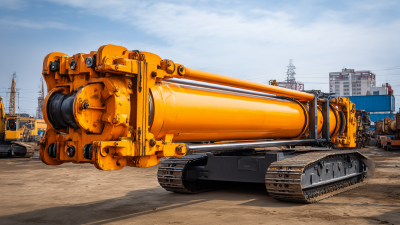
Advantages of Using Bucket Cylinders Over Other Types

In hydraulic systems, bucket cylinders offer distinct advantages compared to traditional cylinders. They are designed for applications demanding high torque and efficient force transmission. A study by the Hydraulic Institute indicates that bucket cylinders can provide up to 30% more lifting capacity than standard models. This increased efficiency is crucial in industries like construction and manufacturing, where heavy loads must be managed effectively.

Another key benefit lies in their compact design. Bucket cylinders are built to withstand greater pressures with a smaller footprint. Engineers often face space constraints in machinery design. The design allows for easier integration within tight spaces, which can lead to significant cost savings in both design and installation. Moreover, maintenance requirements are lower due to fewer components that can fail. A report from the American Society of Mechanical Engineers highlights that proper maintenance of hydraulic systems can boost lifespan by approximately 50%.

However, the decision to switch to bucket cylinders must be carefully evaluated. Not every system requires their unique capabilities. In some cases, the complexity added by their design may not justify their use. It's essential to assess the specific needs of each application to make informed choices about cylinder selection.

Why Choose a Bucket Cylinder for Your Hydraulic System? - Advantages of Using Bucket Cylinders Over Other Types

Feature Bucket Cylinder Other Cylinder Types
Load Capacity High Moderate
Stability Very Stable Less Stable
Maintenance Low Higher
Cost Efficiency High ROI Variable
Versatility Highly Versatile Less Versatile

Key Design Features of Bucket Cylinders

When considering hydraulic systems, bucket cylinders stand out due to their unique design features. These cylinders often utilize a double-acting structure, allowing for effective movement in both directions. A study by the International Fluid Power Society found that systems using bucket cylinders can achieve up to 30% higher efficiency than traditional options. This efficiency translates into better performance for machinery used in construction and agriculture.

The versatility of bucket cylinders is significant. They can accommodate larger loads and are often made with durable materials to withstand harsh conditions. The cross-sectional design enables improved stability, which is crucial in demanding environments. However, not every application may benefit from a bucket cylinder. For instance, in some confined spaces, their larger dimensions can be a limiting factor.

In addition to strength, the ease of installation is another appealing feature. Many operators report that bucket cylinders require less maintenance than other cylinder types. According to recent data, maintenance costs can be reduced by 15-20%. Nevertheless, ensuring proper compatibility with the hydraulic system remains vital. Choosing a cylinder without full consideration can lead to inefficiencies. Every decision warrants thoughtful reflection on application needs.

Key Design Features of Bucket Cylinders

The chart below illustrates the key design features of bucket cylinders and their importance in hydraulic systems. Each feature is rated based on its significance in performance and reliability.

Applications and Industries Utilizing Bucket Cylinders

Bucket cylinders are essential in various applications across multiple industries. These hydraulic components play a crucial role in lifting, digging, and material handling. Construction and agriculture often deploy these cylinders for equipment like loaders and excavators. Additionally, waste management companies rely on bucket cylinders for efficient operation of compactors and refuse trucks.

In the mining industry, bucket cylinders are vital for operating heavy machinery. They enable loaders to move significant amounts of earth or ore efficiently. However, their application isn't without challenges. The cylinder's performance can be affected by extreme weather or improper maintenance. Regular inspections are necessary to ensure optimal functionality.

Moreover, the versatility of bucket cylinders extends to marine applications. They assist in dredging and lifting operations in ports. Yet, the corrosive environment poses risks, requiring specialized materials. It’s essential for engineers to consider these factors when integrating bucket cylinders into their systems for reliable performance.

Maintenance Tips for Optimal Performance of Bucket Cylinders

Bucket cylinders are integral to hydraulic systems. Their efficiency depends significantly on regular maintenance. Neglect often leads to performance degradation. According to industry reports, a lack of proper upkeep can decrease the cylinder's lifespan by nearly 40%. This statistic underlines the importance of ongoing care.

One effective maintenance tip is to regularly inspect seals and connections. Small leaks may seem insignificant, yet they can lead to larger issues. A study from the Hydraulic Institute revealed that nearly 25% of hydraulic failures stem from these overlooked components. Keeping a close eye on these areas can prevent costly repairs later.

Additionally, ensuring the hydraulic fluid remains clean is crucial. Contaminated fluid can cause wear and tear on the cylinder components. Research shows that maintaining fluid cleanliness can increase system efficiency by up to 15%. Implementing a fluid filtration system may seem like a significant investment, but the long-term benefits are undeniable. It’s essential to reflect on the potential risks of skimping on these maintenance practices. Ignoring these details could prove detrimental to system performance.