How to Choose the Right Connecting Rod for Your Engine?
Choosing the right connecting rod for your engine is crucial for optimal performance. A connecting rod serves as the link between the piston and the crankshaft. A well-selected connecting rod can enhance engine power and efficiency. However, making this choice isn't always straightforward.
Several factors influence your decision. Engine size, desired power output, and material type all play a role. For instance, aluminum rods are lightweight, yet they may lack the durability needed for high-performance applications. On the other hand, steel rods offer strength but can be heavier. Understanding the specific requirements of your engine is essential.
As you navigate this selection process, consider your goals. What performance are you aiming for? Reflecting on your choices can lead to better outcomes. An ill-fitting connecting rod can lead to severe engine damage. Take your time to weigh your options carefully. The right connecting rod will ensure reliability and enhance your engine’s capabilities.
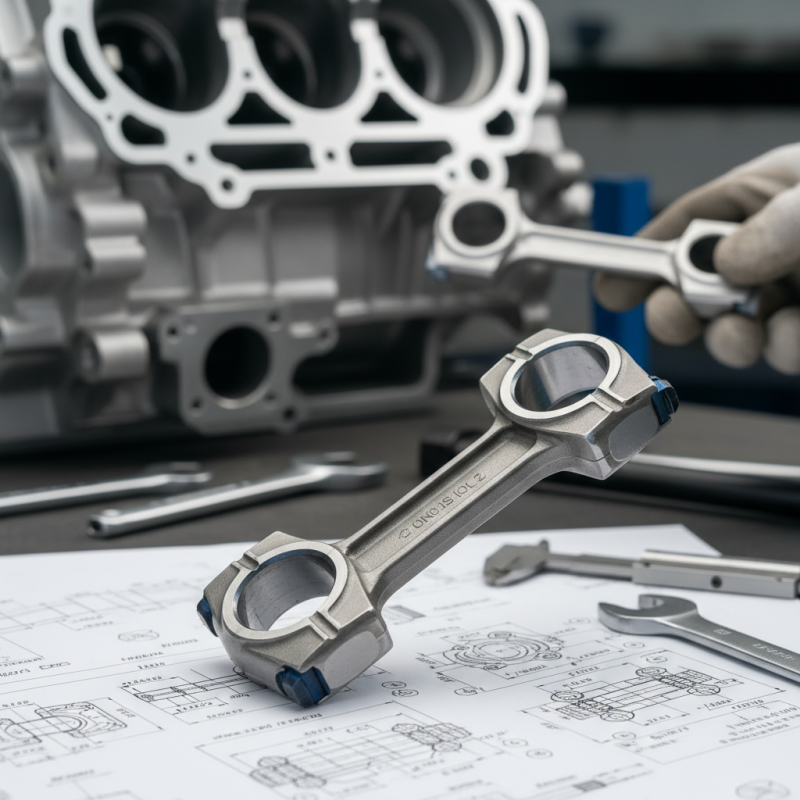
Understanding the Basics of Connecting Rods in Engine Design
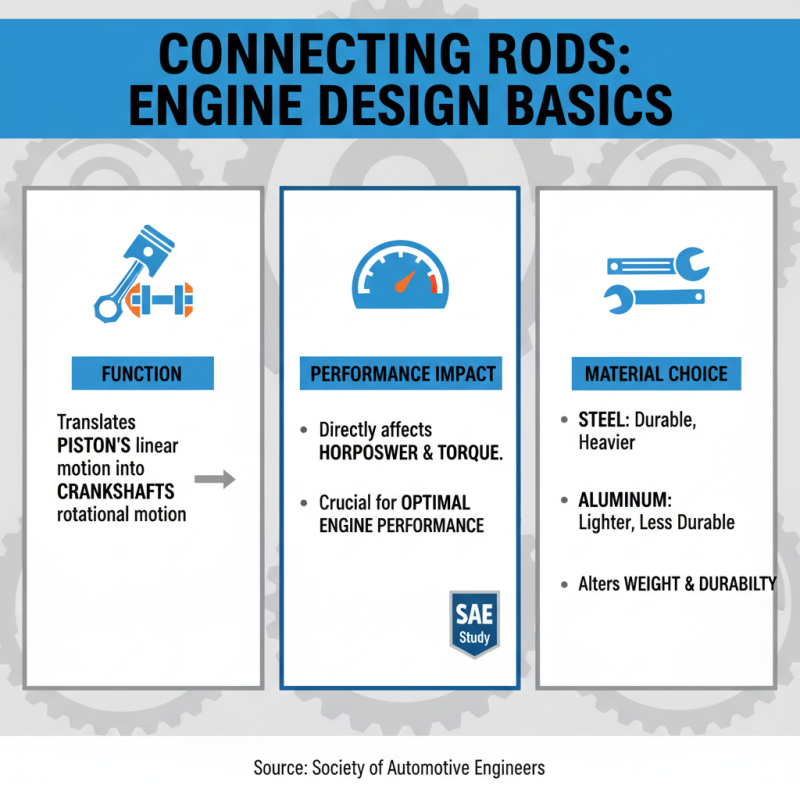
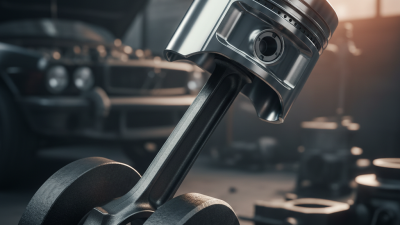
Connecting rods are vital components in engine design. They translate the linear motion of pistons into rotational motion for the crankshaft. Understanding their function is crucial for optimal engine performance. According to a study by the Society of Automotive Engineers, the quality of connecting rods can directly affect horsepower and torque output. Selecting the correct rod material, such as steel or aluminum, alters the engine's weight and durability.
Material choice impacts performance. Steel rods are robust and can handle higher loads. However, they are heavier. Aluminum rods are lighter and can improve engine responsiveness. Yet, they may wear out faster under extreme conditions. Research indicates that a lightweight setup can lead to a 5-10% increase in efficiency.
Beyond materials, sizing matters. Incorrect rod lengths can lead to poor engine timing. A mismatch may cause piston slap or premature wear. Some engineers overlook rod-to-stroke ratios, leading to performance issues that are hard to diagnose. Understanding the geometry involved is essential for those engaging deeply in engine design.
Key Factors to Consider When Selecting Connecting Rods
Choosing the right connecting rod for your engine is crucial for performance. Several key factors come into play when making this important decision.
Material selection is one such factor. Connecting rods are typically made from steel, aluminum, or titanium. Steel rods are affordable and durable. Aluminum rods are lighter, enhancing speed. Titanium offers strength but can be costly. Your engine's performance and budget should guide this choice.
Another factor to consider is the length of the connecting rod. A longer rod may provide better performance due to reduced angle changes during rotation. However, compatibility with your engine’s design is essential. An incorrect length can lead to engine failure or inefficiencies.
**Tips:** Always check your engine specifications before purchasing. Ensure a balanced choice between weight and strength. Don’t overlook the importance of proper installation; incorrect placement can compromise performance.
Another consideration is the bearing type. Some rods come with favorite bearing types that may suit high-performance engines better. Ensure you understand the implications of your choice. It’s important to assess all factors carefully to avoid oversights. Make informed decisions for the best results.
Comparing Material Types for Optimal Performance and Durability
Choosing the right material for connecting rods is crucial for engine performance. Various materials offer different strengths and weaknesses.
Aluminum alloys are lightweight and often used in performance engines. They provide good strength but may lack durability. In contrast,
forged steel offers high tensile strength. It is favored in high-power applications, handling extreme temperatures.
According to industry reports, the tensile strength of forged steel can reach upwards of 1,400 MPa. This makes it ideal for racing applications.
In comparison, cast iron connecting rods, while common, deliver lower performance. They are heavier and less suitable for high-revving engines. The trade-off is often
weight versus strength, which requires careful consideration.
Reflecting on material choices, failures can expose weaknesses in design. For example, an overly lightweight rod can snap under load.
Balancing weight and durability is essential for longevity. Engineers emphasize the importance of testing materials under real-world conditions.
This step ensures the chosen rods meet performance goals without unexpected failures.
Evaluating Size and Weight Implications on Engine Efficiency
Choosing the right connecting rod for your engine involves more than just compatibility. The size and weight of the connecting rod play a crucial role in engine efficiency. A lighter rod can reduce the overall weight of the engine. This reduction often leads to better performance and improved fuel economy. However, weight isn't the only consideration.
Larger connecting rods can provide better strength and stability under pressure. Yet, oversized rods add unnecessary weight. This excess weight can lead to increased inertia, which impacts acceleration and responsiveness. It’s essential to find a balance. Too light a rod may compromise durability, while too heavy a rod could hinder performance.
When evaluating connecting rods, consider the engine's specific requirements. Every engine behaves differently under stress. Matching the rod's size and weight to these conditions is vital. Sometimes, experimenting with different options can yield surprising results. This trial-and-error approach can uncover solutions that initial calculations do not predict. Evaluating these factors critically will lead to more informed choices.
Assessing Cost vs. Performance: Budgeting for the Right Connecting Rods
When selecting
connecting rods
for your engine, cost and performance often go hand in hand. High-performance rods can boost your engine's output, but they come with a significant price tag. Consider your goals. If you’re building a
race engine, you might need to splurge a bit. On the other hand, a daily commuter doesn’t need the same level of performance.
Evaluate your budget carefully. Premium rods might offer better durability and weight savings, but generic options could suffice for less demanding applications. Think about the trade-offs. Are you willing to
compromise on weight
and material quality for savings? Also, remember the potential hidden costs. Cheaper rods may lead to performance issues or even engine damage over time.
Research is crucial. Seek advice from experts. Experience matters when determining the right balance for your project. A visit to forums or workshops can yield insights. Not every high-priced option guarantees better performance. Sometimes, the right choice involves unforeseen compromises and a willingness to reflect on your engine’s specific needs.

 +86 13794985240
 CONTACT NUMBER
 CONTACT NUMBER