Top Bucket Teeth Types for Heavy Machinery Which One is Best?
Bucket teeth play a crucial role in the efficiency and effectiveness of heavy machinery. As construction and mining industries expand, so does the demand for reliable bucket teeth solutions. According to a recent report by the Construction Equipment Market Analysis, the construction equipment market is projected to grow at a CAGR of 4.3% from 2021 to 2026. This growth emphasizes the need for machinery to operate at peak performance, with bucket teeth being a vital component.
Different types of bucket teeth offer unique advantages and disadvantages. For instance, pointed teeth excel in digging through tough materials, while flat teeth are ideal for soft soil. However, many operators still struggle with choosing the best type for specific tasks. An expert recommendation from the Association of Equipment Manufacturers highlights that using the right bucket teeth can improve productivity by up to 20%.
Choosing the right bucket teeth is essential yet often overlooked. Many operators may not realize that the wrong choice can lead to costly downtime. An improper fit can stress the machinery and lead to premature wear or even failure. Each project’s demands differ, and understanding these nuances can aid in achieving optimal performance.
Types of Bucket Teeth and Their Applications in Heavy Machinery
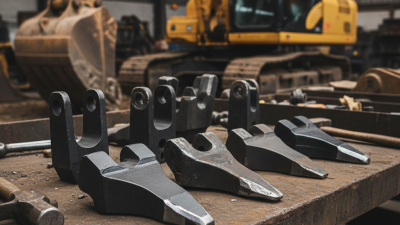
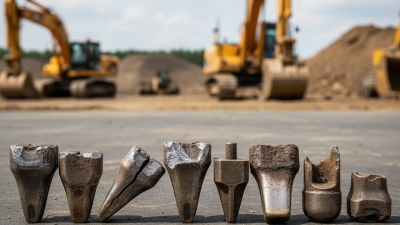
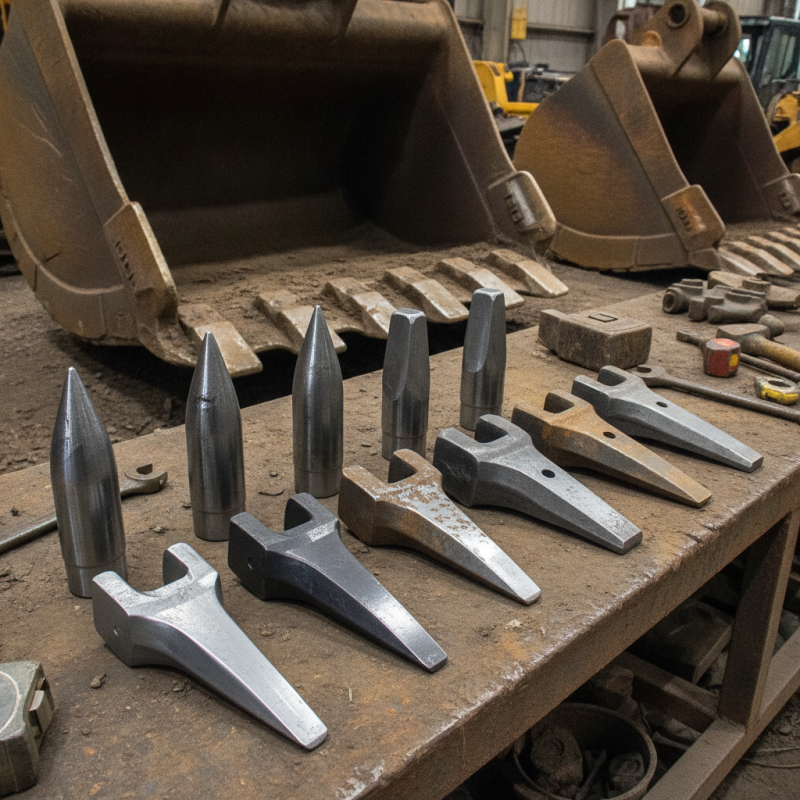
When it comes to heavy machinery, choosing the right bucket teeth is essential. Different types serve varied applications. For instance, aggressive digging requires a sharper, pointed tooth while general earthmoving tasks can benefit from a more blunt design. Each tooth type interacts with materials differently, influencing efficiency and wear.
The classic long tooth is popular for its penetration strength. It digs deep into the ground but can struggle in rocky terrain. In contrast, the flat tooth excels in moving loose materials and can easily scoop up gravel or sand. However, this tooth type might not hold up in tough environments.
Choosing the best bucket teeth also depends on the operator's experience. Over time, adjustments may be necessary as conditions change. Budget constraints often lead to compromises. A well-informed choice balances cost and performance, but not all operators will feel confident in their decisions. It’s crucial to evaluate local conditions regularly to ensure optimal performance.
Top Bucket Teeth Types for Heavy Machinery Which One is Best?
| Type of Bucket Tooth |
Material |
Application |
Advantages |
Disadvantages |
| Standard Tooth |
High Carbon Steel |
General Excavation |
Durable and Versatile |
Less effective in rocky soils |
| Heavy Duty Tooth |
Manganese Steel |
Rock Excavation |
Superior Strength and Wear Resistance |
Higher cost |
| Penetrating Tooth |
Cast Alloy |
Soft Soils and Demolition |
Great for penetrating hard material |
Not suitable for compacted earth |
| Bolt-On Tooth |
Steel Alloy |
Versatile Applications |
Easily replaceable |
Bolts can loosen over time |
| Adapter with Tooth |
High Alloy Steel |
Custom Applications |
Customizable for different tasks |
More complex installation |
Key Factors Influencing Bucket Tooth Performance and Selection
When selecting bucket teeth for heavy machinery, several key factors come into play. The material of the teeth is crucial. High-strength steel or hardened alloy choices can impact durability and wear resistance. Understanding soil types and the machine's operational conditions is equally essential. Different environments require specific tooth shapes and sizes for optimal performance.
Tips: Always assess your work environment. If you frequently work in rocky terrain, choose a tooth designed for hard surfaces. Pay attention to the wear indicators on your teeth. These can help you determine when it's time for a replacement.
Another important aspect is compatibility with your specific loader or excavator. Mismatched teeth can lead to poor efficiency and premature wear. Operators must also consider the impact of tooth design on loading and digging efficiency. For instance, wider teeth provide better ground penetration but may slow down loading times.
Tips: Regular maintenance checks are vital. Inspect the teeth for wear and damage often. This proactive measure can save time and costs in the long run. Don't overlook the importance of seeking expertise from knowledgeable professionals in the field when making your choice.
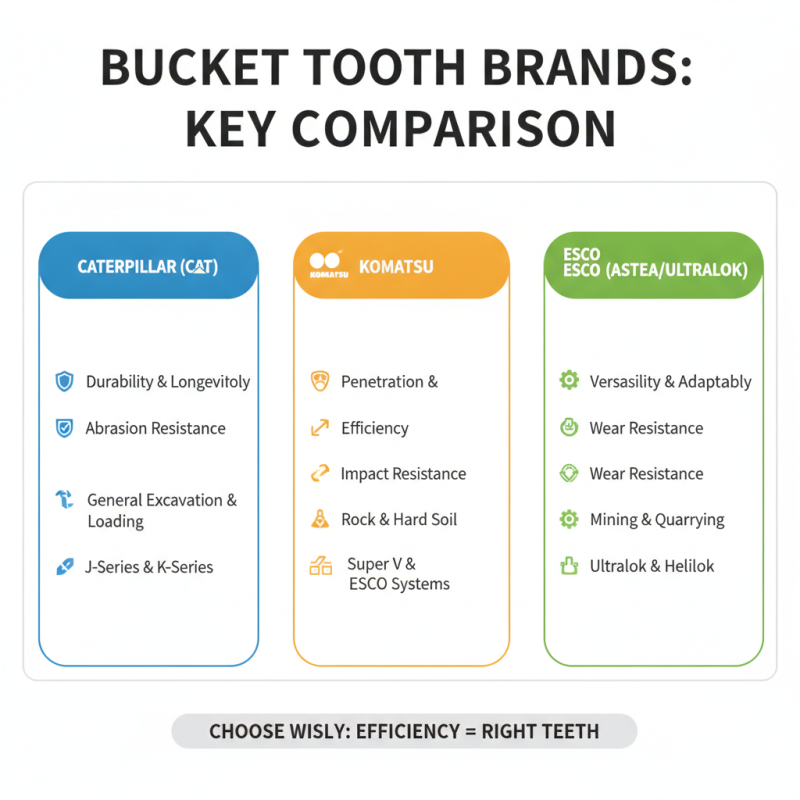
Comparison of Popular Bucket Tooth Brands and Their Offerings
When choosing bucket teeth for heavy machinery, understanding the options is crucial. Different brands offer unique designs and features suited for various applications. Some prioritize durability, while others may focus on specific performance metrics, like penetration or wear resistance. The interplay of these factors directly impacts your project's efficiency.
If you're digging in rocky terrain, a tooth designed for high abrasion is essential. It can save you time and reduce equipment wear. However, softer materials may be suitable for lighter jobs. This balance between strength and application is often overlooked. Not every task requires heavy-duty equipment; understanding the environment is key.
Comparing tooth styles, some might excel at sharpness, while others offer broad surfaces for stability. Each has pros and cons. A tooth that works well in one setting may fail in another. This variability forces operators to reassess their choices. Engage with experienced users for insights. Their real-world experience can shed light on potential challenges you may face.
Impact of Material Composition on Bucket Tooth Longevity and Efficiency
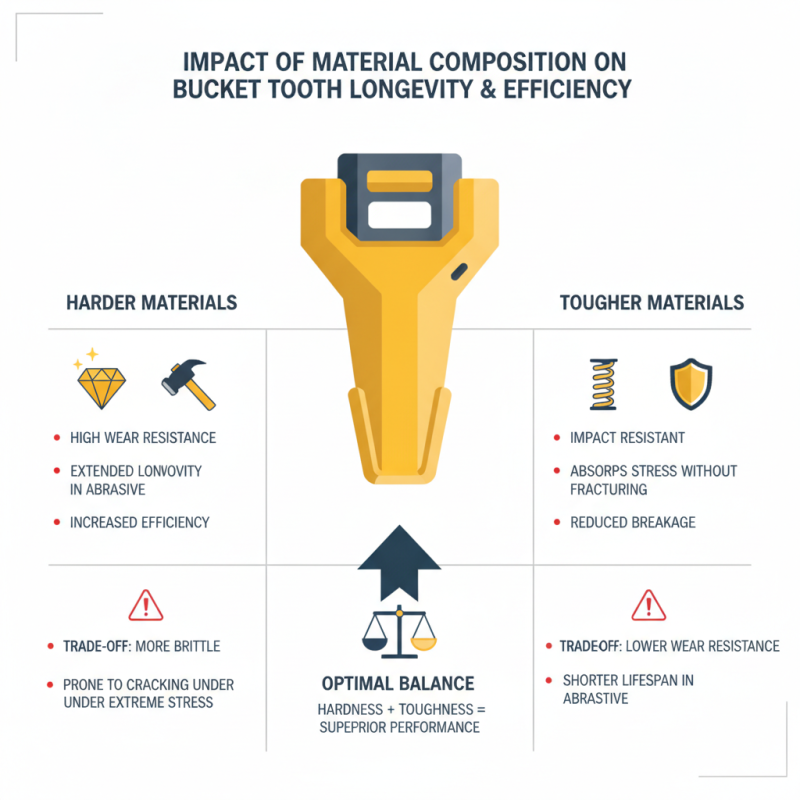
When considering bucket teeth for heavy machinery, material composition plays a significant role in their longevity. High hardness materials can resist wear during tough operations. However, these harder materials may be more brittle. They can crack under extreme stress. This balancing act between hardness and toughness is crucial.
For optimal efficiency, choosing the right alloy is vital. Steel alloys with specific properties often provide a good compromise. They exhibit strength and flexibility, enduring the rigors of daily tasks. However, some users overlook the importance of regular maintenance. Neglecting to check for wear can lead to reduced performance and increased costs. It’s easy to underestimate the impact of a worn tooth.
Even the best materials suffer from fatigue over time. This is a reminder that regular assessments can prolong the life of bucket teeth. Operators must remain vigilant and proactive. In the end, the right material composition won't guarantee success alone. Continuous improvement and awareness can make all the difference.
Cost-Effectiveness Analysis of Different Bucket Teeth Types for Operators
When selecting bucket teeth for heavy machinery, cost-effectiveness emerges as a critical factor. A recent industry report revealed that operators can save up to 20% on maintenance costs by selecting high-durability materials. This is notable because durable bucket teeth typically reduce replacement frequency, leading to overall savings. For instance, carbide-tipped teeth, although initially more expensive, can last up to three times longer than standard options.
Moreover, using the right bucket tooth design can enhance operational efficiency. Data from construction sites indicates that the right shape can improve soil penetration by 15%. This directly translates to quicker work completion times and lower fuel consumption. Yet, many operators overlook the initial investment for specialized teeth, often opting for cheaper alternatives that may not yield longer-term savings.
While cost is a significant aspect, factors such as wear resistance and performance also warrant consideration. Reports show that operators often experience higher downtime due to frequent repairs with lower-cost teeth. Balancing costs and performance ensures better returns in the long run. Consequently, understanding the implications of different bucket teeth types can significantly affect an operator’s bottom line.
Cost-Effectiveness Analysis of Different Bucket Teeth Types for Operators

 +86 13794985240
 CONTACT NUMBER
 CONTACT NUMBER