Top 10 Compact Wheel Loaders You Should Consider Now?
In the ever-evolving construction landscape, Compact Wheel Loaders have become vital tools for efficiency and productivity. Industry expert John Carter once stated, "The right compact wheel loader can transform how you approach a job site." This sentiment reflects the growing importance of these machines in various applications.
Compact wheel loaders are versatile, maneuverable, and powerful. They excel in tight spaces where larger equipment cannot operate. From landscaping to material handling, their flexibility is impressive. Yet, not all models are created equal. Factors like weight, lift capacity, and attachment compatibility greatly influence performance.
As businesses look to invest in compact wheel loaders, making an informed choice is crucial. Each model offers unique features and drawbacks. It’s essential to evaluate your needs thoroughly. Finding a machine that perfectly fits your requirements can improve your operations significantly. Wise decisions lead to enhanced productivity and reduced costs.
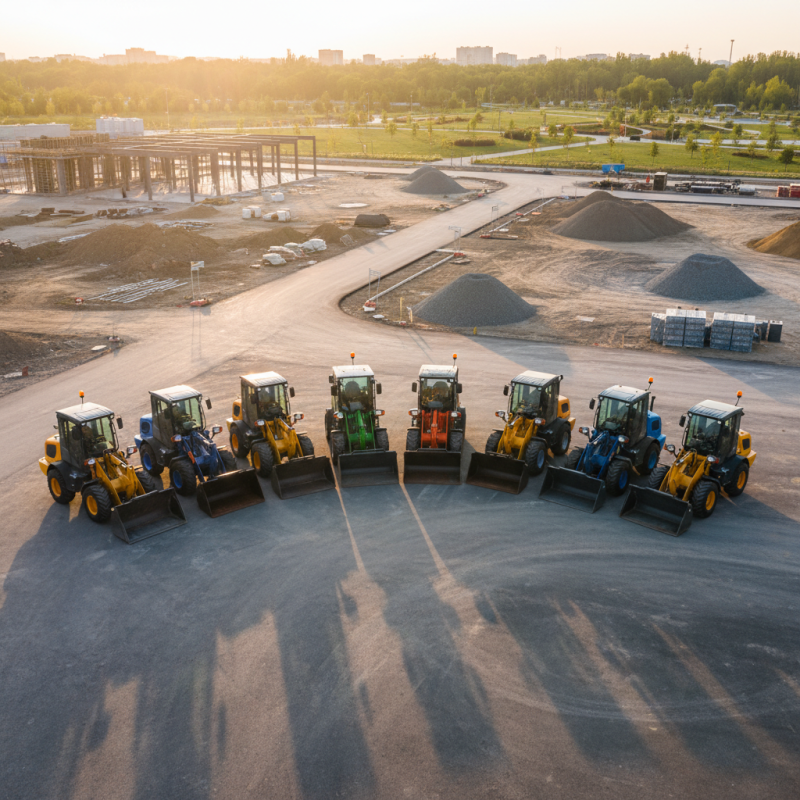
Overview of Compact Wheel Loaders and Their Applications
Compact wheel loaders are increasingly popular in various industries. Their versatility makes them suitable for landscaping, construction, and agricultural tasks. According to a recent industry report by Grand View Research, the global market for compact wheel loaders is expected to grow at a rate of over 5% annually through 2030. This signifies a rising demand driven by urbanization and infrastructure development.
They excel in confined spaces. A compact wheel loader can operate effectively on narrow job sites, which larger machines cannot access. Their capabilities include loading, lifting, and transporting materials. They are often equipped with different attachments, enhancing their functionality. However, operators must be mindful of weight limits and machinery maintenance. Neglecting these factors can lead to performance issues and increased operational costs.
Many users appreciate their ease of maneuverability. In busy environments, these loaders can make tight turns. Users often report improved efficiency during tasks like digging or grading. However, some limits exist. For example, they may not possess the power needed for heavy-duty excavation. This limitation might require the investment in larger machines for specific projects. Overall, while compact wheel loaders are beneficial, understanding their capabilities is essential for maximizing their potential.
Key Features to Look for in Compact Wheel Loaders
When considering a compact wheel loader, key features must not be overlooked. Pay attention to the engine power. A strong engine provides better performance, especially in tough conditions. Look for hydraulic capacity as well. High hydraulic performance allows for effective lifting and digging. This feature impacts productivity significantly.
Another critical aspect is the operator's comfort. A spacious cabin with good visibility enhances operations. Controls should be intuitive, reducing fatigue during long hours of work. Maintenance accessibility is also vital. Easy access to engine parts can save time and costs down the road.
Safety features should never be neglected. Consider models with rollover protection systems and good lighting. These enhancements provide peace of mind while operating in busy environments. Budget is important, but prioritizing functionality can prevent future headaches. Investing in a suitable model often pays off in the long run.
Top 10 Compact Wheel Loaders Performance Comparison
Top 10 Compact Wheel Loaders Recommended for Various Needs
When considering compact wheel loaders, it's crucial to evaluate your specific needs. Different tasks require different features. If your job involves tight spaces, look for compact models with excellent maneuverability. Short turning radiuses are key. Look for machines that are lightweight but still powerful enough for lifting.
If you require versatility, choose loaders that can easily switch attachments. Such loaders can be used for digging, lifting, or even snow removal. Check the hydraulic system's strength as it often determines the machine's performance. It’s worth remembering that bigger isn’t always better; sometimes, compactness wins the day.
Maintenance is another vital aspect. Easy access to components allows for quick repairs. A loader that requires less frequent servicing can save you time and money. However, durability remains an important factor. Some models lose efficiency over time, so choose wisely. A well-rounded compact loader should strike a balance between power and practicality. Think about your daily operations as you make this decision.
Comparison of Performance and Efficiency in Compact Wheel Loaders
Compact wheel loaders are remarkable for their versatility. Performance and efficiency are key aspects when selecting the right model. Some loaders excel in lifting capacity, while others shine in speed. Analyzing these factors can guide you toward a better choice.
Consider the engine power. A more powerful engine can improve productivity but may increase fuel consumption. Balancing these elements is crucial, as it affects operational costs. Many users report that selecting the right attachments boosts efficiency even more. However, incorrect pairing can lead to underperformance.
Size matters too. Smaller models can access tighter spaces but may lack the strength for heavy lifting tasks. This trade-off must be evaluated carefully. Operators often note that poorly maintained machines can degrade efficiency, highlighting the importance of regular upkeep. Understanding these nuances can help make an informed choice that aligns with specific needs.
Top 10 Compact Wheel Loaders You Should Consider Now
| Model | Engine Power (HP) | Operating Weight (lbs) | Bucket Capacity (cu yd) | Lift Height (in) | Fuel Efficiency (mpg) |
| Model A | 75 | 4500 | 1.0 | 120 | 20 |
| Model B | 80 | 4800 | 1.1 | 125 | 18 |
| Model C | 85 | 4900 | 1.2 | 130 | 22 |
| Model D | 90 | 5000 | 1.3 | 135 | 19 |
| Model E | 95 | 5100 | 1.4 | 140 | 21 |
| Model F | 100 | 5200 | 1.5 | 145 | 17 |
| Model G | 105 | 5300 | 1.6 | 150 | 20 |
| Model H | 110 | 5400 | 1.7 | 155 | 18 |
| Model I | 115 | 5500 | 1.8 | 160 | 19 |
| Model J | 120 | 5600 | 1.9 | 165 | 20 |
Maintenance Tips for Maximizing the Lifespan of Compact Wheel Loaders
Compact wheel loaders are versatile machines. Their efficiency can diminish without proper maintenance. Following effective maintenance tips can help maximize their lifespan.
Regularly check and change the oil. Dirty oil can lead to engine wear. According to industry reports, timely oil changes can improve engine life by up to 40%. Keep hydraulic fluids at optimal levels. Inspect for leaks often. Leaking fluids can cause significant damage over time. This simple step can save costly repairs.
Tire Maintenance is crucial. Proper tire pressure enhances fuel efficiency by around 10%. Over-inflated or under-inflated tires can lead to uneven wear. Operators should also clean the loader regularly. Dirt and debris can wear down components. A clean machine is a happy machine. Neglecting these upkeep tasks results in problems down the line. Ensure all parts are well-lubricated to avoid unnecessary friction.
These strategies are more than best practices; they are essential for a long-lasting relationship with your compact wheel loader. But many operators overlook them. Reflect on your maintenance routine to prevent premature failure.

 +86 13794985240
 CONTACT NUMBER
 CONTACT NUMBER