Leave Your Message

Top Fuel Control Valve Manufacturers and Suppliers?

Fuel control systems are becoming more demanding as energy producers balance efficiency, safety, and emissions performance. The International Energy Agency’s Electricity 2024 report expects global electricity demand to grow by about 4% annually through 2026. This growth supports continued investment in gas turbines, industrial boilers, backup generators, and process heating equipment. Each application depends on stable, accurately metered fuel delivery.

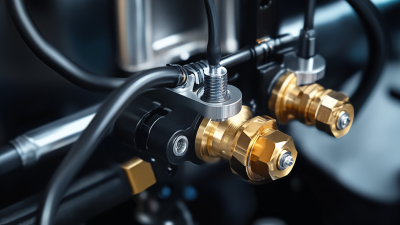
That is where the Fuel Control Vavle becomes important. It regulates pressure, flow, and shutoff performance near the burner or engine. A small response error can cause unstable combustion, wasted fuel, or an unexpected shutdown. In a real plant, technicians may inspect actuator movement, instrument signals, and valve seals beside a vibrating turbine enclosure. The details matter.

Leading manufacturers now compete through tighter control, diagnostics, and lower leakage. IEC 61508 remains a key reference for functional safety, while ISO 15848 addresses fugitive-emission testing for industrial valves. Reports from MarketsandMarkets and Grand View Research also identify automation, energy efficiency, and process safety as major drivers of industrial valve demand. Their market estimates differ because product definitions vary. That limitation deserves attention.

A reliable supplier should provide traceable materials, tested pressure ratings, calibration records, spare-parts support, and application engineering. Brand recognition alone is not enough. Buyers should compare response time, turndown capability, fail-safe action, maintenance access, and lifecycle cost. This guide examines leading Fuel Control Vavle manufacturers and suppliers through those practical criteria, while recognizing that regional service quality can change the final decision.

Top Fuel Control Valve Manufacturers and Suppliers?

What Is a Fuel Control Valve and How Does It Work?

What Is a Fuel Control Valve and How Does It Work?

A fuel control valve regulates the fuel entering an engine, burner, boiler, or turbine. It converts a control signal into a precise change in flow. The controller reads demand, temperature, pressure, and sometimes oxygen levels. An actuator then moves the valve plug or disc. More opening usually increases fuel flow and output. Less opening reduces combustion intensity.

The simple explanation is useful, but incomplete. Real systems are rarely so tidy. Pressure changes can distort flow, especially during startup or sudden load shifts. A reliable valve must respond smoothly, seal properly, and move to a safe position during power loss. NFPA 85 emphasizes supervised fuel-train protection for combustion systems, while ISO 23551 covers safety and control devices for gas burners and appliances. These requirements make sizing and testing practical engineering tasks, not paperwork.

Demand for dependable fuel control remains significant. The U.S. Energy Information Administration reported that natural gas generated about 43% of U.S. utility-scale electricity in 2023. The International Energy Agency’s Gas 2024 report also recorded global gas demand growth of roughly 2.5% in 2023. In field work, technicians often find that calibration drift matters more than visible valve damage. A small signal error can create unstable flames, excess fuel use, or repeated trips. Maintenance should verify stroke position, leakage, response time, and sensor accuracy under realistic operating conditions. One limitation remains: no valve compensates for poor combustion design.

Key Types of Fuel Control Valves and Their Applications

Fuel control valves determine how much fuel reaches an engine, burner, or turbine. Their design affects starting, load response, emissions, and operational safety. Suppliers should provide tested materials, clear flow data, and traceable quality records.

Solenoid valves suit simple on-off control in generators, industrial burners, and emergency shutdown systems. They respond quickly, but their fixed position limits precise fuel adjustment. Proportional valves offer gradual flow control for engines and heating equipment. Electronic signals adjust the opening as demand changes. Servo valves provide finer regulation in turbines and high-performance combustion systems. They need clean fuel and accurate calibration.

Pressure-regulating valves maintain stable outlet pressure when inlet conditions fluctuate. They are common in fuel trains and boiler systems. Needle valves allow careful manual adjustment during testing or low-flow operation. Check valves prevent reverse flow and protect upstream equipment. Small details matter. A valve may appear correctly sized, yet poor response can cause unstable combustion.

Experienced buyers compare flow range, pressure rating, temperature limits, seal compatibility, and failure position. Stainless steel may suit demanding environments, while specialized elastomers support different fuel conditions. Installation also matters; vibration, pipe alignment, and contamination can shorten service life. In practice, valve selection is not always neat. Engineers sometimes prioritize maximum flow and overlook minimum controllable flow, creating difficult low-load behavior. Suppliers with application testing and after-sales calibration support offer more dependable results.

How to Evaluate Fuel Control Valve Manufacturers

Evaluating fuel control valve manufacturers requires more than comparing catalog prices. The IEA’s Oil 2024 report expects global oil demand to reach about 105.4 million barrels per day by 2030. That scale increases pressure on accurate, stable fuel control. A suitable manufacturer should provide traceable materials, repeatable flow testing, and documented calibration results. Ask for test conditions, not only performance claims.

Check whether the supplier designs valves for your fuel type, pressure range, temperature, and actuator response. Compliance with recognized standards, such as ISO 9001, API 598, and ISO 15848-1, can support quality and emissions control. However, certificates do not replace evidence. Request inspection records, pressure-test procedures, failure statistics, and spare-part lead times. A 2024 Grand View Research assessment places the broader industrial valve market on a steady growth path through 2030, making supplier capacity worth examining carefully.

Field service matters. Can technicians diagnose unstable pressure near a hot engine? Can the manufacturer explain cavitation, seal wear, and control hysteresis in practical terms? Ask for a reference installation with similar fuel conditions. One uncomfortable truth: the cheapest valve may create higher costs through downtime and tuning work. Yet an expensive specification can also be excessive. I would challenge every claimed benefit and calculate lifecycle cost using real maintenance intervals, energy loss, and replacement risks.

Top Fuel Control Valve Manufacturers and Suppliers? - How to Evaluate Fuel Control Valve Manufacturers

Evaluation Dimension Recommended Requirement or Benchmark Evidence to Request Why It Matters Priority
Application and Fuel Compatibility The valve should be specifically selected for the fuel type, pressure, temperature, flow rate, viscosity, and required control range. Completed datasheet, material compatibility statement, application references, and sizing calculation. Fuel properties directly affect sealing, corrosion resistance, cavitation risk, and control accuracy. Critical
Flow Capacity and Valve Sizing Sizing should be based on calculated flow coefficient, upstream and downstream pressure, fluid density, vapor pressure, and operating temperature. Sizing report, flow coefficient data, capacity curves, and confirmation of minimum, normal, and maximum operating points. Correct sizing prevents poor controllability, excessive pressure loss, noise, vibration, and premature wear. Critical
Pressure and Temperature Rating The pressure class and temperature range must meet or exceed the complete design envelope, including start-up, shutdown, and upset conditions. Pressure-temperature rating chart, design calculations, hydrostatic test records, and applicable product standards. Adequate ratings reduce the risk of leakage, deformation, and pressure-boundary failure. Critical
Control Performance Review rangeability, hysteresis, repeatability, resolution, response time, and shutoff capability against the process control requirements. Factory performance test results, characteristic curves, actuator data, and control-loop compatibility information. Stable and predictable control supports efficient combustion, accurate fuel delivery, and safe operation. Critical
Leakage and Emissions Performance Specify the required seat leakage class and, where applicable, fugitive-emission performance for stem and body seals. Leakage test certificates, seat leakage classification, packing specifications, and fugitive-emission test reports. Low leakage improves fuel efficiency, environmental performance, personnel safety, and regulatory compliance. Critical
Applicable Technical Standards The supplier should identify applicable requirements from standards such as IEC 60534, ISA 75, ISO 15848, IEC 61508, or relevant national pressure-equipment rules. Standards compliance matrix, certificates, design calculations, and third-party inspection records where required. Standards provide a consistent basis for design, testing, safety, documentation, and acceptance. High
Hazardous-Area Suitability For explosive atmospheres, the complete valve and actuator assembly should match the required area classification and protection concept. Valid hazardous-area certificates, equipment marking, temperature class, installation limitations, and conformity documentation. Fuel systems may release flammable vapors, making ignition prevention essential. Critical
Materials and Corrosion Resistance Wetted materials, trim, elastomers, and coatings should be compatible with the fuel, additives, ambient conditions, and any sour-service exposure. Material certificates, elastomer compatibility data, corrosion allowance, coating specification, and sour-service compliance if applicable. Material failure can cause internal leakage, loss of control, contamination, or pressure-boundary damage. Critical
Actuator and Fail-Safe Function The actuator must provide sufficient torque or thrust and achieve the specified fail-open, fail-closed, or fail-in-place position. Actuator sizing calculation, fail-position confirmation, stroke-time data, spring details, and instrument-air or electrical requirements. A suitable fail-safe response helps prevent over-fueling, flame instability, equipment damage, and unsafe shutdowns. Critical
Functional Safety Capability Where the valve forms part of a safety instrumented function, evaluate the required safety integrity level, diagnostic coverage, and proof-test interval. Functional-safety certificate, failure-rate data, proof-test procedure, safety manual, and system-level verification information. Safety performance depends on the valve, actuator, solenoid, position feedback, and testing regime as a complete loop. Critical
Quality Management System A documented quality system certified to ISO 9001 is a useful baseline for design control, purchasing, production, inspection, and corrective actions. Current certificate, certification scope, audit status, nonconformance procedure, and quality plan. A controlled quality system improves consistency and traceability across repeated orders. High
Inspection and Test Capability The supplier should be able to perform dimensional, pressure, seat-leakage, functional, material, and coating inspections appropriate to the order. Inspection and test plan, calibrated equipment list, test procedures, test records, and optional third-party inspection arrangements. Testing verifies that the delivered valve meets the approved design and purchase specification. High
Traceability and Documentation Each pressure-containing and critical component should be traceable to material, heat, inspection, and final test records. Material test certificates, serial-number register, drawings, manuals, calibration records, certificates, and final data book. Complete documentation supports installation, commissioning, audits, maintenance, and future replacement. High
Customization and Engineering Support Evaluate the supplier’s ability to provide custom trim, special materials, low-temperature designs, noise reduction, positioners, and integrated assemblies. Engineering organization chart, sample calculations, application case studies, drawings, and technical response time. Fuel systems often require a matched valve, actuator, instrumentation, and control strategy rather than a standard valve alone. High
Delivery Capability Assess realistic lead time, production capacity, critical-component availability, expediting process, and ability to meet project milestones. Manufacturing schedule, capacity statement, delivery performance records, milestone plan, and approved expediting procedure. Late delivery can delay commissioning, shutdown work, or replacement of critical fuel-system equipment. High
After-Sales Service and Spare Parts Confirm availability of replacement trim, seals, actuators, positioners, repair kits, troubleshooting, and field-service support. Spare-parts list, recommended inventory, maintenance manual, service coverage, response-time commitment, and training options. Strong lifecycle support reduces downtime and helps preserve the original safety and control performance. High
Total Cost of Ownership Compare purchase price with energy loss, maintenance frequency, spare-parts cost, inspection cost, downtime exposure, and expected service life. Lifecycle cost model, maintenance intervals, warranty terms, energy-loss estimates, and historical repair data. The lowest initial price may not provide the lowest operating cost or the best reliability. High
Supplier Evaluation Method Use a weighted scorecard, technical clarification process, document review, reference checks, and factory or virtual audits before approval. Completed bid comparison, audit report, technical deviation list, reference feedback, and approved-vendor evaluation record. A documented, evidence-based process reduces purchasing risk and improves supplier comparability. High
Suggested scoring approach: Assign 5 points for full compliance, 3 points for partial compliance, and 0 points for missing or unacceptable evidence. Treat critical safety, pressure, leakage, material, and fail-safe requirements as mandatory pass/fail conditions before comparing commercial scores.

Leading Qualities of Reliable Fuel Valve Suppliers

Reliable fuel valve suppliers are judged by more than catalog size or attractive pricing. Their valves must control flow accurately under vibration, heat, pressure changes, and repeated cycling. Experienced suppliers understand these conditions because they have studied failures in real equipment, not only laboratory reports. They should explain material choices clearly, including stainless steel bodies, compatible seals, and corrosion-resistant internal parts. Practical knowledge matters.

Quality control should be visible and repeatable. A dependable supplier tests opening pressure, shutoff performance, leakage, and endurance before shipment. Each valve should carry traceable batch information and inspection records. Clear drawings and dimensional data also reduce installation errors. Ask how the supplier manages changes in raw materials or production tooling. Quiet changes can create expensive problems.

Communication reveals professional reliability. Technical staff should answer questions directly and provide useful operating limits. They should also admit uncertainty when application details are incomplete. That honesty is valuable. I have seen projects delayed because a supplier promised universal compatibility without checking fuel composition or temperature. No supplier is perfect. However, responsible teams investigate complaints, preserve samples, and improve procedures after a failure. Responsive replacement support, stable lead times, and carefully packed components further show operational maturity. A supplier worth considering does not merely sell a valve; it documents how that valve will perform in your specific system.

Top Fuel Control Valve Manufacturers and Suppliers: Leading Qualities of Reliable Fuel Valve Suppliers

Relative procurement priority index based on common industrial fuel-valve qualification criteria. The figures are not company performance ratings or market-share data.

Reliable suppliers are typically evaluated by pressure and temperature capability, verified leakage control, material compatibility with the fuel, documented testing, traceability, and long-term technical support. Buyers should confirm the final specifications against the fuel type, operating conditions, applicable codes, and project requirements.

Industry Standards, Customization, and Purchasing Considerations

Selecting top fuel control valve manufacturers requires more than comparing unit prices. Industry standards should guide the shortlist. IEC 60534 supports control valve sizing, testing, and performance evaluation. IEC 61508 matters when the valve supports a safety instrumented function. For combustion systems, NFPA 85 or NFPA 86 may apply, depending on the equipment and site. The IEA’s Gas 2024 report forecasts global gas demand growth of more than 2.5% in 2024. That growth increases pressure for reliable, efficient fuel regulation. Still, compliance documents alone do not prove field performance.

Customization should begin with operating data, not a preferred valve design. Provide fuel composition, inlet pressure, temperature, flow range, shutoff class, actuator response time, and installation orientation. Ask suppliers for Cv calculations, materials certificates, calibration records, and factory acceptance testing. Stainless steel trim may resist corrosive gas components, while specialized seals can support wider temperature ranges. Specify fail-open or fail-closed action clearly. Small misunderstandings become expensive during commissioning. They really do.

Purchasing teams should compare lifecycle cost, spare-part availability, lead time, service support, and traceability. The U.S. Department of Energy reports that industrial motor-driven systems can represent a major share of facility electricity use, reminding buyers that control performance affects wider system efficiency. A fuel valve may not consume much power itself, yet poor control can increase cycling, emissions, and maintenance. No checklist is perfect. A practical review should include a witnessed test, realistic failure scenarios, and an honest discussion of what the supplier cannot customize.